Monday, December 17, 2012

Only Part of the Problem

Dead: 27
Age Range: 6-56
Bullets Per Victim: 2-11
Guns Used: 3
Monster: 1

Hundreds, if not thousands, of pieces (like this one) have already been written in response to the recent atrocity that was the Sandy Hook Elementary School massacre, where 20 children and six adults were brutally murdered by 20-year-old Adam Lanza. While investigators continue to dig for answers, the nation as a whole has initiated numerous dialogues regarding the prevention of similar incidents in the future. 


The brunt of the discussions have revolved around the long-standing issue of gun control, which is indeed a problem. But there are others. 

As shown above, the nation with the fewest regulations on firearms (of those listed) struggled the most when it came to homicide. Certainly it is a graphic with an agenda, but the numbers cannot be argued with: loose gun regulation will inevitably allow for more murders. 

But Sandy Hook is not about gun control. And here's why:

1. Connecticut has one of the nation's strictest arms regulation policies. According to the Washington Times, to own a gun in the state, one must apply for a permit after the age of 21 and undergo both a safety course and background check. If a national gun control plan was to be launched, it would most likely look something like this. 

That being said, Lanza was a mere twenty-years-old, and not legally permitted to own a firearm. But using force, he obtained one anyways. Were any gun control legislation to be passed, the law would be intended for a sector of the population that wouldn't comply regardless. As Henry D'Andrea says in his article, "Criminals don't follow laws they don't want to; that's why they're criminals in the first place."

2. Rather than reacting to this event with cries for stricter gun control, we as a nation should embrace reform in how we deal with mental illness. Although we will never know exactly what was going through Lanza's mind as he committed undoubtedly the crime of the year, if not the decade, mental health certainly played a role.


Illnesses of the mind --depression, anxiety, OCD-- have over time accumulated an associated stigma. In addition to causing detriment to those diagnosed, this stigma also prevents potentially ill patients from reaching out for help in the first place.

This pigeonholing occurs not only on the playground or in the high school classroom, but throughout one's life. Studies show that 20% of employees who divulge their mental illness to their employers are then let go.

Even if patients do bolster up the courage to seek help, oftentimes they find it unavailable. From 2009 to 2011, nearly $1.6 billion in funding was cut from mental health spending, closing clinics and leaving patients without care.

Lanza's act was not one of spontaneity. A lifetime of mental anguish and social neglect erupted last Friday, an eruption that, with access to the proper medical care, could have been curbed.

3. By posthumously delving into the life of Adam Lanza, the media is playing right into his game. In committing this massacre, Lanza sought in death what he seemingly did not receive in life: attention. And he's not alone in this pursuit.

Lanza has received in the past few days more attention, albeit negative, than anyone else in the country. After years of trying to get noticed, he resorted to the dastardly in a last ditch attempt to have his name remembered.

Time after time the media has "monsterized" the culprits of these mass murders, allowing others seeking recognition an outlet to attain it. Although these criminals are remembered in a negative light, they are remembered.

The media should focus their efforts not on picking apart the suspect, but on learning from their actions. Separate the incident from the issue of gun control. Raise mental health awareness. Move forward.


Wednesday, December 5, 2012

Saudi Arabia and Paul Collier's The Bottom Billion


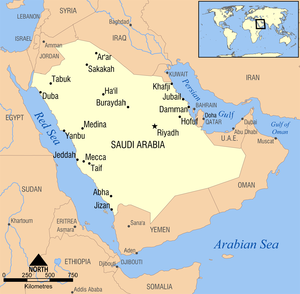
Although the kingdom of Saudi Arabia does not currently fall into Paul Collier’sBottom Billion,” the nation is not inherently devoid of the traps introduced by the esteemed economist: conflict, natural resource, landlocked, and bad governance. To best approach the question of Saudi Arabia’s “trap involvement,” I will break up this blog post into four sections, addressing each complexity individually.

The Conflict Trap

By Collier’s definition (1,000 combat deaths, each side suffering at least five percent of these deaths), Saudi Arabia has never experienced a civil war or coup. The two principal causalities of internal conflict outlined by Collier are low initial income and slow growth or decline. According to the World Factbook, Saudi Arabia has the world’s 24th largest economy, with a GDP per capita that ranks 56th in the world. Although neither statistic jumps off the page, the more important figure is Saudi Arabia’s 7.1% growth rate this previous calendar year. Low income can be dealt with, looked at with hope for improvement. But a depleted growth rate breeds economic despondency. As stated by Collier, “each percentage point added to the growth rate knocks off a percentage point from this risk [of Civil War].” This risk was minimal to begin with, due to the state’s relative economic prosperity. But factoring in the high rate of economic development, this possibility is almost eradicated.

Collier also discusses a country’s dependence on exports in relation to its risk of civil war. Although Saudi Arabia is heavily dependent on its oil industry, the government has managed to supervise its extraction and production. Although initially providing international companies (Texaco, Socal) a role in the industry, Saudi Arabia has since essentially nationalized the natural resource under the government-run Saudi Aramco, thus limiting the potential for exploitation.

The Natural Resource Trap

Depending on the day, Saudi Arabia has in its possession the largest or second largest collection of oil reserves in the world, controlling up to one fifth of the planets supply of this precious natural resource. Collier argues that “over time, countries with large resource discoveries can end up poorer.” But he goes on to mention that, “if you have enough natural resources you can afford to forget about normal economic activity. This is the situation in Saudi Arabia.”

Al-Shaybah Oil Field
Because such a large percentage of the Saudi Arabian economy is this oil industry (90% of the country’s exports are petroleum-based), its prevalence on the international marketplace does not bring about the “resource curse,” better known as “Dutch Disease,” in which the dominance of one national industry diminishes the effectiveness of the others due to an increase in the value of said nation’s currency.  

Saudi Arabia has also proven responsible with its oil revenue, keeping expenditures to a minimum and currently holding the sixth best budget surplus in the world at 13.8% of the GDP. Therefore, unlike Nigeria in the 1980’s, Saudi Arabia will not collapse upon itself in the event of a drop in oil prices.

Finally, as Saudi Arabia is a autocratic monarchy, it has been able to steer clear of the corruption associated with democracies rich in resources. Patronage politics play no role in the choosing of political leaders, and taxes remain relevant as they make up 50.3% of the GDP.

Landlocked With Bad Neighbors Trap


Of all the traps presented by Collier in his analysis, "Landlocked with Bad Neighbors" proves the least relevant to Saudi Arabia's situation. Not only does Saudi Arabia lie on a peninsula with 2,640 kilometers of coastline, but the Suez Canal and Strait of Aden allow Saudi Arabia to bypass its direct neighbors if it so chooses and trade with the rest of the world, which is what the nation does. In 2011, 13.9% of Saudi Arabian exports (essentially oil) went to Japan, 13.6% to China, 13.4% to the United States, 10.2% to South Korea, 7.8% to India, 4.8% to Singapore, with the remaining 36.3% scattered throughout the globe. Saudi Arabia's geography has done nothing to affect it's economic and political stature other than bless the country with an abundance of natural oil reserves. Where Saudi Arabia is located does not prevent it from interacting with any other nation in particular, and it has the infrastructure in place to be able to do this.

Bad Governance Trap

Collier argues that there exists a ceiling applicable to a country's growth rate, but no basement. Under even the most effective regimes, rarely will a nation exceed growth of 10% in one year. But poor leadership can tank an economy immediately. Since King Abdullah assumed power in 2006, only once has the economic growth rate fallen under one percent, and never has the Gross Domestic Product actually shrunk.

Given the amount of natural resources available to Saudi Arabia, the kingdom just "has to avoid doing harm rather than actively do much good." As long as the infrastructure to export commodities like oil is in place, which it is, Saudi Arabia will succeed economically.

That is not to say the monarchic system of government present in Saudi Arabia is perfect- it's not. There exists little to no religious freedom, women have been subjugated for centuries, and censorship runs rampant. But these vices do not prevent Saudi Arabia from prospering economically, and therefore this nation does not fall under the bad governance trap.


Sunday, November 25, 2012

.025 Percent: A Momentous Decision

Some approximations place the size of the Saudi Arabian royal family at over 30,000 members, 4,000 of whom are princes awarded a monthly salary. Given polygamy's legality in the Kingdom, estimates show this number only expanding, potentially reaching 60,000 within the turn of the decade. Therefore, when it comes to appointing a new King or Crown Prince, a 
momentous decision must be made. 
At 89 years-old, King Abdullah al-Saud is certainly
reaching the end of his tenure. 

King Abdullah al-Saud underwent a significant medical procedure on his back last week, enduring an eleven hour surgery and bringing to mind the mortality of the 89-year-old Saudi Arabian leader. Abdullah is the fifth son of the Kingdom’s founder, Ibn Saud, and has presided over Saudi Arabia since August of 2005. The oil-magnate of a country has thrived under Abdullah’s leadership, but as the ruler’s age increases and health deteriorates, political analysts are beginning to look towards the future, speculating as to who will ascend the throne of the Saudi Kingdom. 
The current crown prince, comparable in stature to the American Vice-President, is Prince Salman, also son of Ibn Saud. But at 76-years-old himself, Salman does not present a long-term solution for the Kingdom. The more immediate problem, however, lies in who will replace Salman as Crown Prince, a decision that will shape the Kingdom for years to come. Abdullah’s half-brothers --Prince Sultan, Prince Nayef, Prince Ahmed, and Prince Muqrin-- seemed to be logical choices for this position, but the death of the first two and resignation of the latter two has muddied the waters. Consequently, there has been much talk about skipping to the next generation and appointing one of King Abdulaziz’s grandsons as the next Crown Prince. Although a decision of this nature is certain to trigger some reactionary sentiment, a generational gap in leadership is becoming more and more likely. 
The Kingdom’s changing of the guard will undoubtedly possess considerable worldwide implications, extending beyond the Middle East and into the global sphere. The leader of the world’s largest oil producer has a certain authority over the international market and interstate relations. Whether this new ruler’s policies favor the right or the left, alliances will be formed and reformed. Seeing as Saudi Arabia is a prominent power in the Middle East, any action taken or policy adopted will almost certainly be emulated by the adolescent and fertile governments formed as a result of the Arab Spring.

It’s a peculiar situation, in that there exists no clear-cut method for determining the next King or Crown Prince. Rather, “the Kingdom's tribal traditions dictate that a new king and senior family members select the heir they consider fittest to lead,” making the looming decision even more difficult. Many members of the royal family oppose this generational jump for fear of having their own lineage excluded from present and future leadership. But on the other hand, the Arab Spring has illustrated above all else that Middle Eastern nations are straying from tradition. No longer is an appeal to tradition an acceptable fallacy.
Whatever decision is reached, the most important aspect is popular support, as citizens no longer fear rebellion against that which they do not approve of.

**Click here for an interesting perspective on the upcoming power transition**

Friday, November 16, 2012

Sample Size


Statisticians will often throw around this phrase, “sample size,” when referring to a set of data that is unlikely to be repeated due to its relatively short sustainability. For example, a baseball player could hit two home runs in his first game. That does not mean that, because there are 161 games left in the season, he will continue onwards to hit 324 dingers.

Unfortunately the same logic has been applied to athlete fathers. From Calvin Murphy, to Karl Malone, to Antonio Cromartie, because of all the horror stories we hear in the news, people assume athletes are inherently poor guardians. I’d like to take a look at some of the best dads in today's sports world, whose stories don't get nearly as much recognition as they should:

Dwyane Wade: 16.9 Points Per Game, 4.9 Assists Per Game, 4.1 Rebounds Per Game, 2.0 Children Salvaged.

For a successful professional athlete like Dwyane Wade, it is nearly impossible to sneeze without the allergy becoming a controversial and prodigious story line on ESPN's ticker, making what he did is so momentous. After a very drawn out and messy divorce from his ex-wife Siohvaughn, Wade plunged back into the infamous spotlight to try and salvage his kids from the settlement. For a long period of time after his divorce in June of 2010, Dwyane received little to no time with his two sons, Zaire and Zion. No one would have blamed him for taking the easy way out, leaving the Z's with Siohvaughn, and just focusing on basketball. But that just didn't lie right with the 2006 Finals MVP. When Dwyane was a child, his parents split up, and in this article, he remembered how important it was for him to be able to spend time with his dad. Obviously, Dwyane grew up in an impoverished Chicago neighborhood, while Zaire and Zion live in wealthy South Florida, but the role of a father remains the same. So, throughout the season, Wade was making trips to Chicago on off-days to settle his custody case, which he finally won in March of 2011. Now that he finally has time to spend with his kids, it is amazing what he is doing. With help from his mother, sister, and a nanny, his boys have been all over the place. Post-It notes flank the walls of Miami's PG's mansion; reminders for karate lessons, Spanish classes, doctor's appointments, and birthday parties. He is taking his vow to his children seriously. Playing for the Heat is now his second job, and his efforts have been appreciated by President Barack Obama, who made Wade the figure head of a new program to get father's to become more involved in their children's lives. When asked what he would be doing on Father's Day he simply replied, "The last two months have been Father's Day."


Derrek Lee: 331 Home Runs, 1959 Hits, 10678 Runs Batted In, .281 Batting Average, 3000 cases of Lebers Congenital Amaurosis in America.
Fame can be used for a lot of things. It can get you money (see Kardashian, Kim). It can get you women (see Jeter, Derek). It can get you in trouble (see Woods, Tiger). Or it could help find a cure for Leber's Congenital Amaurosis. When Derrek Lee's daughter Jada was diagnosed with the rare, but horrific, eye disease in 2007, it took him about two weeks to initiate Project 3000, whose purpose was to identify the estimated 3,000 LCA cases in the United States and discover what gene causes the disease, which can lead to blindness. The initial endeavor for this benevolent organization would cost about $3 million. With Lee's fame, coupled with his likability and good reputation in the league, many players reached out right away. Ryan Dempster donated $50,000 immediately, followed by $1,000 more for each of his strikeouts. Former Cubs catcher Michael Barrett also pledged $50 grand, with a $10,000 increase for each home run he hit. Lee knew what he was doing: "We as athletes are able to reach a lot of people quicker than someone who might not get the media attention. When it's your daughter, you do what you can. It's a very rare disease, so 99 percent of the country hasn't heard of it. We just want to bring awareness to it." It's quite a pleasant surprise to see an athlete do something good with the spotlight.


To donate to Derrek Lee's program, Project 3000, please click here, and the former Cub's specific charity is First Touch.

Dick Hoyt: 234 Triathlons, 21 Duathlons, 67 Marathons, 1 Quadriplegic Son
Dick Hoyt. What else can be said about this guy. Though probably the least recognizable name of the three 'superdads' listed here, his story might be the most miraculous. Dick's son, Rick, was born a spastic quadriplegic with a severe case of cerebral palsy. Doctors informed the Hoyt's that their son had no chance to live a 'normal' life, and it took until Rick was 13 for him to be allowed in the public schools. A computer was built for him that allowed him to express himself by highlighting letters to create sentences. His first one? "Go Bruins!" When a local lacrosse player was paralyzed, Rick expressed interest in participating in the 5 mile run in his benefit. Though the 37 year National Guard Veteran Dick was not the best distance runner, he agreed to push his son through the race, finishing next to last. After the race, Rick told his father, "Dad, when I'm running, it feels like I'm not handicapped." That sentence changed Dick's life. If there was anything he could do to help his son feel 'normal,' he was all in. Since that initial race, Team Hoyt, as they've been dubbed, has participated in over 1,000 races, including marathons, triathlons, iron mans, and even a 45 day, 3,735 mile trip across the country. The story of Dick's love for his son has touched the hearts of many, including this particular blog writer. If  Team Hoyt is to teach us anything, and it can teach us a LOT, it is that there is no barrier that a father/son bond cannot break, no obstacle it can't overcome, no race it cannot run.


To donate to the Hoyt Foundation, or to contact the family, please click here.

Monday, October 29, 2012

A Scary Proposition

Two Percent of Voters Thought Mitt Romney's Real Name is 'Mittens'


        If the United States as a nation was to be wrung out and sieved until only the most fundamental of ideals remained, the principle last standing would almost certainly be democracy (or "democracy" –but that's an argument for another time). Our nation was established by men who believed in affording citizens the right to decide for themselves how their country would be governed. Rallying behind the cry, “No Taxation Without Representation,” thousands of patriots fought tooth and nail in the hope of attaining the freedom of choice that their fathers never had. And that’s wonderful! But in today’s world, a world in which approximately four and a half million people believe they would be voting for someone named after a cat, was that struggle really worth it?
          Our democracy commenced in an imperfect way, extending voting rights only to white, male, property holders. Evidently they were the only civilians who knew what was best for the fledgling nation. But then poor whites and black males became members of this prestigious guild (although registration fees and literacy tests limited their involvement), and finally women could cast their ballots. Nowadays, the government is practically imploring us to take part in any given election, as voter turnout has been so low. We’ve come a long way.
          But at what cost? The quantity of the vote may have increased exponentially, but can the same be said about the quality? In any major decision there lies an opportunity cost, and the extension of voting rights is no different: there now exists a substantive group of people who will cast a vote next Tuesday without knowing who, or what, they are supporting.
          Am I arguing for a return to the oppressive measures of our forefathers? Of course not. The uninformed voter does not lie exclusively in any one demographic, and to brand it any other way is purely un-American. Rather than alleviate the problem through restrictive measures, we as a nation must make strides in our yearning for knowledge, and that knowledge must be readily available.
          Lest I am unclear, by uninformed voter I do not mean someone who is oblivious to the candidates that are running and their stances. An uninformed voter in this sense behaves similarly to a sponge, in that they blindly soak up anything seen or heard when it comes to their political views. They don’t actively seek out information, and make no judgments on their own accord.
          This voter proves hazardous, as one misstep by an aspiring leader could sway their opinion indefinitely. In this year’s election cycle, Romney’s 47% comments or Obama’s Benghazi cover-up undoubtedly swayed some voters with nothing else to center their opinions around. Political ads provide the same bias with their malicious nature. Both candidates bring to the table much more than their faux pas and gaffes. As a result of these isolated incidents, misinformed voters spread throughout the nation will be casting ballots for candidates without having paid attention to the core of their policies.
          There is no quick fix to this dilemma, as unqualified voters are inherent to a democratic state. And as unfair as allowing these citizens the vote may be, revoking that right of expression would prove ten times as iniquitous. Until money is invested in a constructive form of voter education (I'm looking at you, or you, political ads), we as a nation must simply concede that although our system is imperfect, it perfectly represents the people it governs.


Tuesday, October 16, 2012

Anyone Can Be Blind


60% of atheists and agnostics claim to own at least one Bible.

Back in the time of our forefathers, America was founded on secular principles, protected in the Bill of Rights that was tagged onto the Constitution. But if not for Christianity (or religion in general), where do cultural mainstays like the illegality of same sex marriage, or the prohibition of female voting until 1920 really come from?

Essentially, America is not the poster child for separation of church and state as so many like to believe, which is exactly why atheists are still to this day discriminated against for their faith (or lack thereof).

"This stunning anti-atheist discrimination is egged on by Christian conservatives who stridently — and uncivilly — declare that the lack of godly faith is detrimental to society, rendering nonbelievers intrinsically suspect and second-class citizens."

But from where does this distrust and subordination root?

According to the above Washington Post article, research has shown that atheists are more ethical, intelligent, and happy than the common religious American. How does this group of people present a burden to society?

When atheists begin belittling the beliefs of their fellow Americans, then non-theism becomes a problem. But the same goes for Christians and imposing their values on others.

Atheists can and should be able to believe what they choose to, but blatant disregard for other religions is always unacceptable.
Reverting back to the initial statistic provided, at least 60% of atheists own a Bible. To me, this indicates a heightened level of self-awareness and spirituality.

Many make the argument that atheism exists as the by-product of pure and utter laziness. "I don't have time to devote to a religion..."

But those people do not take the initiative to declare themselves atheists. They simply become non-practicing Christians, or Muslims, or Jews.

There are certainly atheists who accept their status blindly, simply drawing that religious orientation out of a metaphorical hat. But from my experiences, far more Christians are anointed that way. And that doesn't have to be a bad thing; I'm one of them! But I was born into a family where both parents were Christian, because they were born into families where both parents were Christian, and so on.

Atheists tend not to have such a luxury in the form of spiritual predisposition. Their decision tends to be forged through much personal contemplation, as well as through reflection on their experiences with the Bible or other religious texts.

One can be Christian before knowing anything at all about the Christian faith. Most are baptized before their first birthday! But very few are born atheist. To declare oneself as such requires at least a working knowledge of the abandoned religion, because something must have spurred this break from "the norm."

In Barbara Kingsolver's The Poisonwood Bible, readers begin to notice a shift in religious fidelity among several of the narrators. These are the daughters of a devout Baptist Reverend, mind you, and cannot possibly spend more time with the Bible and its Scripture. Yet through years and years of exposure some of the girls begin to notice aspects or teachings that do not jive with their own personal myth, and lose faith in not only their lifelong religion but their own upbringing as well.

If you are able to briefly transpose your way of thinking, you might find it in your heart to agree with me when I say that atheists, on the whole, are equally, if not more religiously aware than any other faction. In any denomination you will have your devouts. But a significant chunk of any religion's population are the previously mentioned blindly accepting, yet unaware. That chunk does not exist among the atheist crowd. Who's lazy now?

Thursday, October 4, 2012

The Modern Number


17: Years of age.
161: Pounds (73.03: Kilograms).
24: hours of sleep...over the past five nights.
1: Caffeinated drinks in that same span (kicking the habit).

There are over 42 million blogs in the country, very few of which focus on statistical analysis and the importance of numbers in today's society. This one does.

3: Brothers.
0: Brothers older than me.
2: Dogs.
1: Quiet moments (The family went to Cooperstown last summer without me).

Ever since I can remember, I have always retained a bizarre attraction to the sheer dominance of numbers. Something about the preciseness, I suppose. You're right, or you're wrong, and that's that. No gray area.

But these numbers have to come from somewhere and go someplace else. Numbers existing in a vacuum alone have no place outside the classroom. No, this blog talks about important numbers, numbers that reflect global tendencies and shape our world on a day to day basis. Numbers that indicate future occurrences and evoke memories occurrences past. This blogs talks about numbers that are alive.

11: Colleges applying to.
6: Trips to the emergency room.
2: Semesters of Linear Algebra and Multivariable Calculus this year.
88: Keys on my piano (52 White and 36 Black)

The Digital Age both requires and generates more extensive data collection than ever before. There are those that choose to utilize this accessibility and those who throw it to the wayside. To tie in my love of baseball, I find that a Moneyball reference tends to reach a broader audience now that Michael Lewis' nerdy creation has been transformed into a Brad Pitt approved, Academy Award nominated blockbuster. Which team won?

There are those who were brought up in a world prior to the information age, where gut instincts ran rampant and ill advised decisions were even more commonplace than today. Important verdicts were reached with little to no effective research or examination. That isn't to say issues were taken lightly back in the day, but rather the resources for valuable data crunching simply did not yet exist.

2800: Homecoming Queen ballots tallied today.
22: Days spent in Germany this past summer.
6: Movements in this year's Marching Band show.
10: Freshmen in my Peer Group.

But then came along the Tim Berners-Lees, Bill Gates-es, the Steve Jobs-es. And all of the sudden, facts traveled infinitely faster and informed decisions were now feasible. Statistics were being used in the stock market, in foreign policy, in athletics, and in marketing. They were available for public use and they were locked up for the right eyes only. But most importantly, they were there. They existed, and not in a vacuum. And thus, the modern number was born.